

Can Pressure Washing Damage Your Property? What You Should Know
Pressure washing can transform a stained driveway, dirty patio, or weathered exterior surface in a relatively short time. When the right equipment and technique are used, it is an effective way to remove accumulated dirt, algae, mildew, and other buildup.
However, pressure washing can damage your property when too much force is applied or when the same cleaning method is used on every surface.
The equipment itself is not necessarily the problem. Damage usually occurs because the operator uses the wrong pressure setting, nozzle, distance, cleaning angle, or solution for the material being cleaned. A method that works well on durable concrete may be completely inappropriate for asphalt shingles, vinyl siding, painted wood, or aging stucco.
At All Washed Up, we do not treat every exterior surface the same. We use controlled pressure washing where the material can safely tolerate it and a lower-pressure soft-washing process for siding, roofs, and other more sensitive surfaces. Choosing the correct process is the most important part of cleaning a property without harming it.
Why Pressure Washing Can Cause Damage
A pressure washer sends water through a narrow opening at considerable force. That concentrated stream can loosen deeply embedded grime from hard surfaces, but it can also strip away finishes or penetrate openings that ordinary rainfall would not reach.
The amount of pressure is only one factor. The nozzle pattern, distance from the surface, angle of application, and length of time spent in one spot all affect the cleaning force. Even a moderate machine can cause damage when the tip is held too close.
Inexperienced operators often assume that a stubborn stain requires more pressure. In many cases, the better solution is to use an appropriate cleaning treatment, allow it time to work, and rinse the surface carefully. Increasing the force may remove the visible stain, but it can also remove part of the material underneath it.
Professional exterior cleaning is therefore not about using the highest available setting. It is about applying enough cleaning power to remove the contamination without changing or damaging the surface.
High Pressure Can Damage Siding
Siding is one of the most commonly damaged surfaces during do-it-yourself pressure washing.
Vinyl siding may crack, become dented, or separate when it is hit with excessive force. High-pressure water can also be driven behind the panels through seams, corners, vents, and openings around windows. Once water gets behind the exterior surface, it may take longer to dry and can affect materials that were not intended to become saturated.
Painted siding presents another challenge. If the paint is already peeling, chalking, or poorly bonded, pressure washing may remove more than the homeowner expected. Wood siding can become rough, splintered, or visibly etched when the spray is too aggressive.
Stucco and older masonry surfaces also require care. Cracks, loose areas, aging mortar, and previous repairs can make parts of the exterior more vulnerable than they appear from the ground. All Washed Up notes that improper high-pressure washing can strip paint, loosen mortar, damage siding, and crack delicate exterior materials.
For house washing, All Washed Up uses a soft-washing technique that combines low-pressure water with cleaning detergents designed to treat algae, mildew, and dirt. This process reduces the need to rely on strong water pressure when cleaning siding.
Pressure Washing Can Harm Asphalt Shingles
A roof should never be treated like a driveway.
Asphalt shingles have protective surface granules that contribute to their appearance and performance. A concentrated stream of high-pressure water can dislodge those granules, lift shingle edges, and direct water beneath roofing materials.
GAF, a major roofing manufacturer, specifically advises against pressure washing asphalt shingles because the force can cause granule loss and lift the shingles. Its technical guidance also warns that power washing may contribute to premature shingle failure.
Roof cleaning should instead rely on a process designed for the roofing material. All Washed Up uses a soft-wash system for roofs, applying an appropriate cleaning treatment at significantly lower pressure. The company also backs qualifying roof washes with a five-year warranty against the return of dark streaks, subject to the warranty terms.
Soft washing does not mean that roof cleaning is risk-free or suitable for every roof. Missing shingles, severe deterioration, active leaks, or structural problems should be addressed by a qualified roofing contractor before cleaning is attempted.
Wood Can Be Etched or Splintered
Decks, fences, steps, and other wooden surfaces can benefit from professional pressure wash cleaning, but wood is particularly sensitive to technique.
When the spray is held too close, pressure washing can cut into the softer portions of the wood grain. The result may be visible lines, raised fibers, splintering, or an uneven surface. These marks can become even more noticeable after the deck dries.
Excessive pressure may also remove an existing stain or finish. That may be intentional when a deck is being prepared for refinishing, but it should not happen unexpectedly. The operator needs to understand whether the goal is routine cleaning, finish removal, or preparation for staining.
The age and condition of the wood also matter. Weathered boards, loose fasteners, rot, cracks, and previous repairs can affect how the surface responds. A professional should inspect the area and adjust the equipment rather than assuming every deck can withstand the same pressure.
Concrete Is Durable, but It Is Not Indestructible
Concrete is often one of the best candidates for professional pressure washing. Driveways, sidewalks, patios, and similar hard surfaces can tolerate more cleaning force than siding or roofing.
That does not mean concrete cannot be damaged.
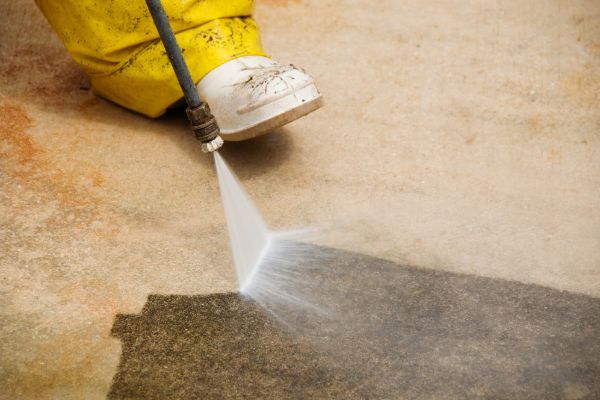
Holding a narrow nozzle too close can leave etched lines, circles, or uneven patterns. Cleaning one section more aggressively than another can also create visible color differences. Newer concrete may be especially vulnerable if it has not fully cured, while older concrete may contain cracks, loose aggregate, failing repairs, or surface deterioration.
Professional equipment can help create a more uniform result. Surface cleaners distribute the water across a wider area and reduce the streaking that often occurs when a homeowner cleans an entire driveway with a small wand.
All Washed Up offers pressure washing for durable exterior surfaces such as driveways, patios, decks, fencing, and other areas, while adjusting the process according to the material and condition of the property.

Windows, Screens, and Seals Can Be Vulnerable
Windows are designed to withstand normal rain, but concentrated water sprayed directly at seals, frames, screens, and openings creates a different type of exposure.
High pressure can tear screens, loosen aging caulk, damage seals, or push water around window frames. Decorative trim and shutters may also become loose if the operator sprays upward or works too close.
The area around doors presents similar concerns. Water can enter around thresholds, weather stripping, vents, electrical fixtures, and other exterior openings when the spray is directed carelessly.
Before washing begins, a professional crew should identify vulnerable areas, confirm that windows and doors are closed, and choose a cleaning angle that moves water away from openings rather than into them.
Landscaping and Outdoor Belongings Need Protection
The house itself is not the only part of the property that requires attention during exterior cleaning.
Cleaning solutions and runoff must be managed around shrubs, flowers, grass, outdoor furniture, vehicles, decorative items, and nearby structures. Even when the products used are selected for exterior cleaning, careless application or inadequate rinsing can affect sensitive landscaping.
Property preparation is an important part of a professional service. Plants may need to be pre-wet, certain items may need to be moved, and runoff may need to be controlled throughout the project. Crews should also avoid spraying electrical outlets, fixtures, cameras, and other equipment directly.
A good result is not simply a clean surface. The surrounding property should also be treated carefully from the beginning of the project through the final inspection.
Soft Washing and Pressure Washing Are Not the Same
Homeowners often use “pressure washing” as a general term for all exterior cleaning, but pressure washing and soft washing are different processes.
Pressure washing uses controlled water force to remove buildup from durable surfaces. Soft washing relies more heavily on cleaning solutions and low-pressure application. The treatment breaks down organic contamination so it can be rinsed away without subjecting the material to aggressive force.
Soft washing is generally better suited to roofing, siding, and other sensitive exterior materials. Pressure washing remains useful for many hard surfaces when it is performed with the right equipment and technique.
All Washed Up uses its soft-wash system on roofs and siding rather than applying high pressure indiscriminately. The company states that its technicians complete structured training and field instruction before advancing through different levels of responsibility.
Why DIY Pressure Washing Creates Additional Risk
Consumer pressure washers are widely available, which can make exterior cleaning appear simple. The challenge is that the damage often happens quickly.
A homeowner may not recognize that a surface is being etched until the area dries. Water may enter behind siding without creating an immediate visible sign. A pressure-washing line on concrete or wood may also become more obvious only after the entire project is finished.
There are personal safety concerns as well. Pressurized water can cause injury, and wet surfaces become slippery. Using the equipment while standing on a ladder adds another layer of risk. Hoses, electrical connections, uneven terrain, and nearby vehicles can make the project more complicated than expected.
Hiring a professional does not eliminate every possible risk, but it places the work in the hands of people who understand the equipment, cleaning methods, and surface limitations.
All Washed Up carries more than $2 million in liability insurance, provides workers’ compensation coverage for employees, conducts professional background checks, and requires training before technicians take on greater field responsibilities.

How a Professional Reduces the Risk of Damage
A professional exterior-cleaning project should begin with an assessment rather than immediate spraying.
The technician should identify the surface material, look for pre-existing damage, determine what type of contamination is present, and select the appropriate cleaning process. Pressure, nozzle selection, distance, solution strength, dwell time, and rinsing method should then be adjusted to the situation.
Communication is also important. Homeowners should know which surfaces are being cleaned, what results are realistic, and whether any existing damage could affect the outcome.
All Washed Up sends customers communication before the appointment and provides updates when the crew is on the way, when it arrives, and when the work is complete. The company has served the Lynchburg area since 2010, washed more than 15,000 homes, and earned more than 1,750 five-star reviews across several platforms.
Its service area includes Lynchburg, Forest, Bedford, Amherst, Appomattox, Madison Heights, Rustburg, Moneta, Smith Mountain Lake, and many surrounding Central Virginia communities.
Pressure Washing Is Safe When the Process Fits the Surface
Pressure wash cleaning can damage property, but that does not make it an unsafe service when performed correctly. The key is matching the cleaning method to the material.
Durable concrete may require controlled pressure. Siding and roofing usually need a softer process. Wood, painted surfaces, stucco, windows, and older materials require careful evaluation before work begins.
The safest exterior-cleaning company is not necessarily the one with the most powerful machine. It is the one that knows when to use pressure, when to reduce it, and when a surface should not be washed at all.
All Washed Up combines professional pressure washing and soft washing based on the needs of each property. This surface-specific approach helps Central Virginia homeowners remove exterior buildup while reducing the risk of damage to the surfaces they are trying to protect.
https://www.google.com/maps?cid=6190010787751412671
381 Crowell Ln, Lynchburg, VA 24502, United States


